



MODERNIZATION
JOURNEY

A LEADERSHIP GUIDE FOR STATE TRANSPORTATION, LICENSING, AND LAW ENFORCEMENT AGENCIES

Your modernization
journey starts
with better questions.

Make the leadership decisions before the technology choices.

Define what must improve, what your agency must own, and how to move forward—with the flexibility to choose the right path.

YOUR AGENCY. YOUR PATH.
01 OUTCOMES02 MEASURES03 PROCESS04 DELIVERY05 OWNERSHIP06 GOVERNANCE07 CAPACITY

Progress begins with a shared direction.
The technology decisions follow.

START WITH WHAT’S POSSIBLE

Your mission is evolving.
So you evolve to meet it.

Modernization creates an opportunity to imagine what your agency could make possible: simpler services, more empowered employees, stronger public safety, and the ability to respond as needs change.

Your leadership team brings the mission, experience and understanding of the people you serve. Kyndryl brings a collaborative approach to translating that ambition into a practical path forward.

These seven questions help you define the future you want to create—and the capabilities, partnerships and technology choices that will help you get there.

THE MISSION IS EVOLVING

New capabilities.
New leadership questions.

Digital identity, autonomous mobility and connected public safety make the choices about people, processes and technology more consequential.

Official Arizona Wallet promotional graphic showing digital Arizona credentials on a smartphone

LICENSING & IDENTITY

Identity goes mobile.

Arizona Wallet brings mobile identity and vehicle documents together on a smartphone, connecting credential services with new ways to serve residents.

Arizona Wallet · Official ADOT promotional graphic
Official ARTS promotional image showing smartphone-based road testing in a vehicle

DRIVER TESTING

A new way to assess driving.

Sapios brings smartphone-based technology to automated road testing, connecting driver evaluation with a more consistent digital process.

Virginia’s Automated Road Test System · Official promotional image
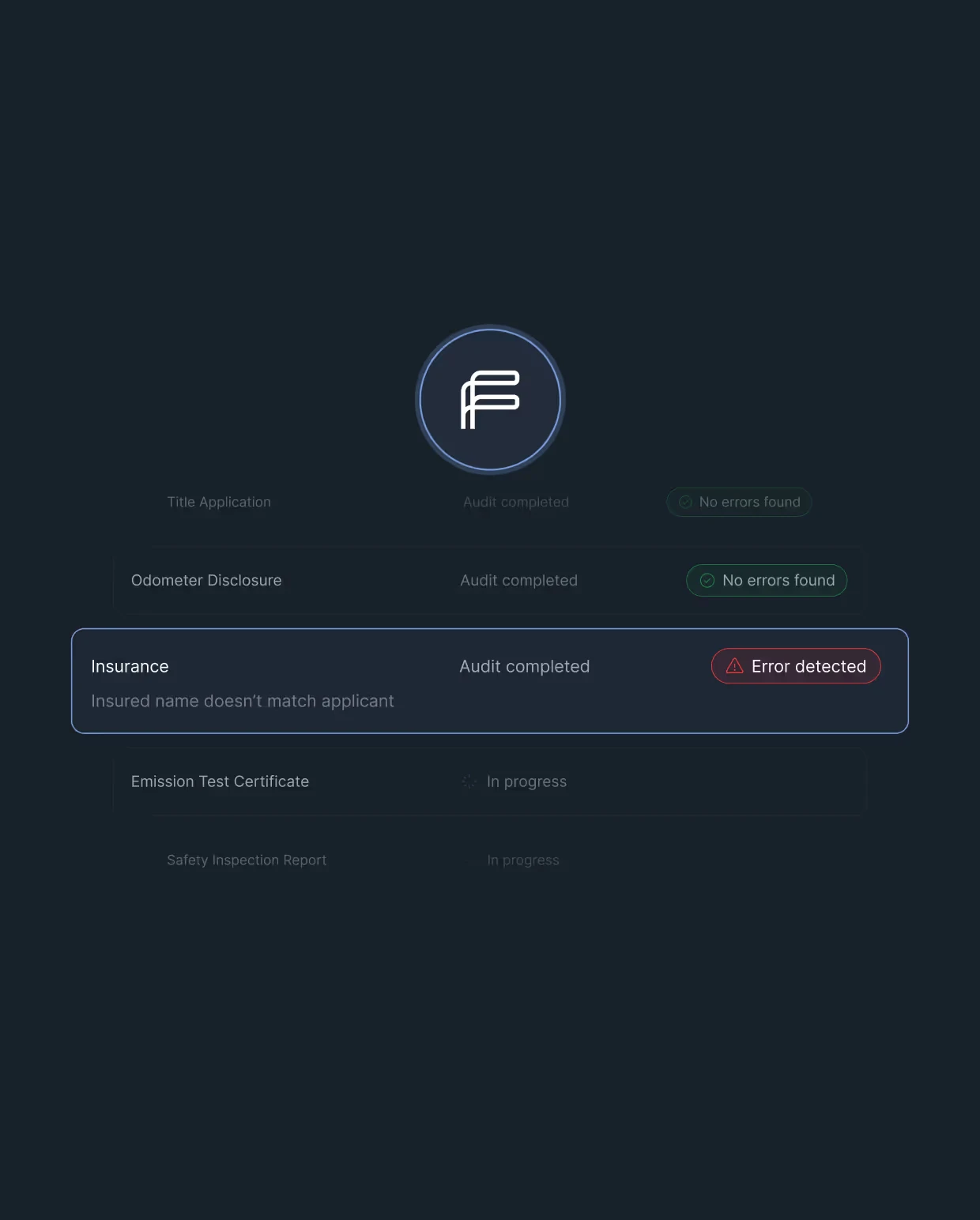
Fairway product graphic showing AI-assisted title and registration document checks

VEHICLE SERVICES

AI-accelerated titling and registration.

Fairway uses AI-assisted document review to check title and registration submissions and flag missing or inconsistent information. Earlier corrections can reduce rework and help agency staff focus on exceptions and decisions.

AI paperwork auditing · Fairway product graphic
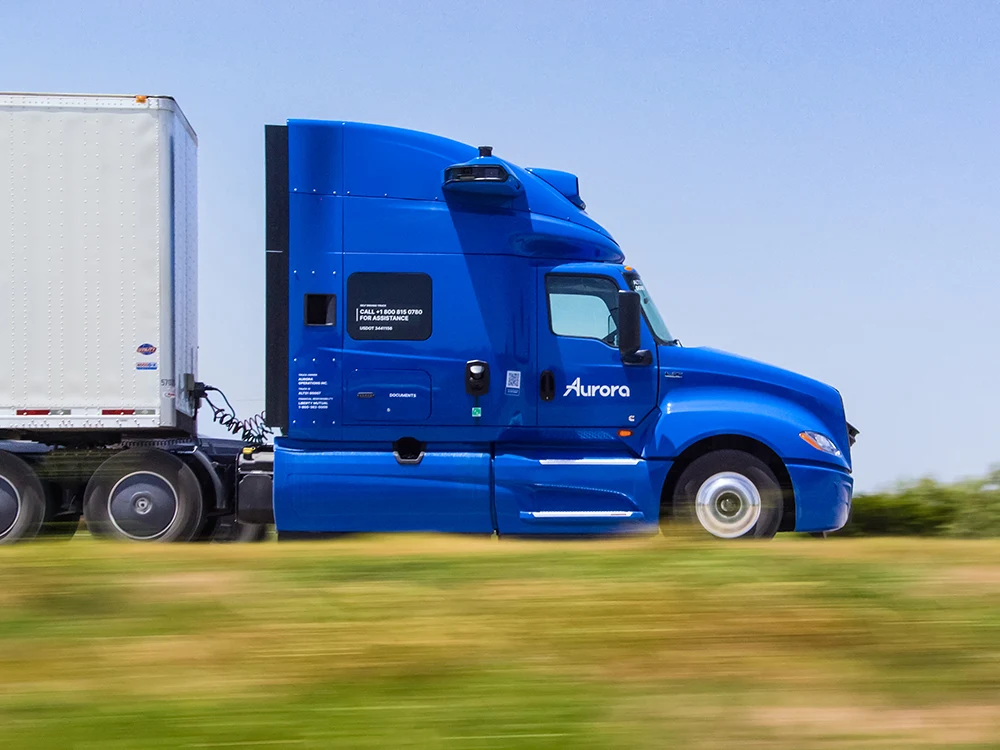
Aurora second-generation autonomous truck photographed on a roadway

TRANSPORTATION

Autonomous Vehicles change the rules

Autonomous vehicles bring questions about safety, oversight, data and agency readiness.

Aurora second-generation driverless truck · July 2026
Skydio X10 drone in flight against a blue sky, with its camera and spinning propellers visible

LAW ENFORCEMENT

Real-time observation advances police tactics

Police drones connect field operations with decisions about information, governance and trust.

Skydio X10 in flight · Photo: Skydio

The starting point stays the same: what should improve, what must the agency protect, and what capability is needed to make it work?

Photography credits & sources

Images provide context for the guide. They do not imply endorsement or a commercial relationship with the organizations or manufacturers depicted.

THE WHITE PAPER · SEVEN QUESTIONS

The decisions that
shape the outcome.

Read each question at your own pace.
Short companion podcasts are on the way.

01OutcomesWhat should be visibly better — and what should modernization not promise?

Define the outcome before the system.

A successful go-live is necessary, but it is not the objective. A short, plain-language statement of what must improve gives employees, executives, legislators and partners the same target. It also gives the modernization team a way to test whether design choices are actually serving the mission.

Leadership teams often land on a handful of outcomes such as:

More eligible services completed digitally, so people who need in-person help have a better experience.

Shorter, more predictable waits for public services and faster responses to operational requests.

Faster turnaround on permits, licenses, records requests and other administrative work, with timely access to information for field teams.

Fewer manual workarounds and less rework for employees.

Policy and legislative changes implemented in weeks rather than months.

RESEARCH SIGNAL Kyndryl’s 2026 research finds that agility, performance, security and control now rank ahead of cost reduction and legacy escape as reasons to modernize. The implication for an agency: define the business capability you want to create, not only the technology you want to replace.

Naming what modernization will not do on its own is equally useful. A new system will not automatically fix every policy, clear every backlog or solve every staffing challenge. Saying so early protects confidence later.

QUESTIONS TO CONSIDER

1. What three performance outcomes should citizens and employees notice first?

2. What makes modernization necessary now, rather than in three years?

3. What should modernization explicitly not promise?

02MeasuresHow will you know you are making progress?

Build the baseline before the transformation begins.

A baseline does not need to be sophisticated to be useful. Useful measures include time to service, turnaround on applications or records requests, and the age of unresolved work. Transportation, licensing and law enforcement agencies should pair these with the safety, accuracy and operational reliability measures their missions require.

AGENCY APPLICATION Monthly averages hide what matters. Trends over time, differences across locations and work units, and the age of unresolved work tell leaders much more. If different service models already operate side by side, use them as real-world evidence about what the future system should support.

How leadership reviews the measures matters as much as the measures themselves. Reviews work best as problem-solving forums: what is driving the trend, where work is getting stuck, and what help the responsible team needs.

QUESTIONS TO CONSIDER

1. What can you measure reliably today, and where are the gaps?

2. What are your current service models already teaching you?

3. Which forum will review trends regularly and coordinate help across units?

03ProcessWhich work should be simplified before it is automated?

Do not digitize complexity you no longer need.

Modernization is a rare chance to reconsider how work gets done. Some steps exist because of law, safety or identity integrity. Others exist only because an old system or past practice required them. Carrying those forward into a new platform locks in their cost for another generation.

A SIMPLE TEST Before automating a process, ask whether it can be eliminated, simplified or standardized.

The people who know which steps add value are on the front line. Frontline employees and supervisors know where the workarounds live, which exceptions are real and which steps exist only because the system demands them. Treat them as citizens of the modernization whose trust must be earned, not simply users who will be told what is changing.

Good places to look first are processes with duplicate data entry, hand-offs between units, paper or spreadsheet steps, frequent citizen return visits, poorly documented exceptions, or dependence on a few experienced people.

RESEARCH SIGNAL Only 9% of organizations in Kyndryl’s 2026 study say they fully understand critical application dependencies before modernization. For an agency, process mapping and dependency discovery are risk controls, not documentation exercises.

QUESTIONS TO CONSIDER

1. Which five processes deserve a hard look before IT development requirements are written?

2. Who has the authority to remove unnecessary steps and standardize work across units?

3. Which statutory or regulatory changes would simplify the work, and how long would they take?

04DeliveryWhich delivery models deserve a look before procurement frames the answer?

Preserve choice until leadership has weighed the trade-offs.

State agencies can modernize their core systems in several different ways, and the way a procurement is written can quietly narrow the options before leadership has weighed them. Broadly, the models are:

MODEL
WHAT IT MEANS
Licensed commercial product
A commercial product configured to the agency’s mission and the state’s rules, typically supported by that vendor over the life of the system.
State-owned platform
A platform whose code the state owns and for which it can choose implementation and support partners. Evaluate whether a suitable platform is proven in comparable agencies.
Custom build
A new system designed for the state on a modern technology stack, built by the state, a vendor or both.
Phased modernization
Replacing components of the existing environment over time while the core continues to operate.
RESEARCH SIGNAL Kyndryl’s 2025 mainframe survey found 80% changed modernization strategy within a year. Kyndryl’s 2026 research adds that 44% now treat modernization as a continuous operating model, compared with 16% using a big-bang approach. Fit and adaptability matter more than choosing a fashionable destination.
44%\nContinuous modernization is part of the operating model
16%\nBig-bang modernization approach

Whatever direction a team leans, ask the same questions of every option: who owns the code, configuration and data; what legislative change costs and takes; whether support partners can be changed; the full ten-year cost; and which peer states are actually live.

QUESTIONS TO CONSIDER

1. Which delivery models offer you the opportunity to innovate quickly and cost effectively?

2. How much long-term control and flexibility is worth paying for?

3. Is a hosted model or cloud model more cost effective over the long-term?

05OwnershipWhat must you own, whatever you buy?

Own the decisions that determine long-term freedom of action.

Partners can provide technology, integration, hosting and specialized expertise. That reliance is normal: three in four organizations in Kyndryl’s 2025 mainframe survey use outside providers for modernization. What matters is being explicit about which decisions stay with the agency.

Regardless of delivery model, agency leaders should retain ownership of business rules and policy; data and data definitions; process design; program priorities; risk decisions; acceptance criteria; and benefits realization.

THE PRINCIPLE The aim is not to perform every technical function in-house. It is to retain enough knowledge and authority to decide how the technology evolves, how data is used, and whether a partner’s recommendation serves citizens, employees and the state’s long-term interests.

Dependencies after go-live — including system changes, data access, reporting, interfaces, upgrades and cybersecurity — are far easier to shape before a contract is signed than after.

QUESTIONS TO CONSIDER

1. Which policy, data, process and risk decisions must stay under agency control?

2. Do you have enough internal expertise to evaluate partner recommendations independently?

3. What support do you need (or want) to manage and improve the system after go-live?

06GovernanceWho decides — and will those decisions hold through change?

Map the people who shape the outcome, then build their needs into the design.

Kyndryl’s 2026 research found that modernization decision-making is distributed: an average of three internal groups hold decision authority, and nine organizational functions have meaningful influence. For a state agency, the stakeholder map also includes other government bodies, local partners and the people and organizations that rely on its services, decisions and information every day.

INTERNAL AGENCY STAKEHOLDERS
EXTERNAL GOVERNMENT STAKEHOLDERS
ECOSYSTEM PARTNERS
• Commissioner / Director / agency head and executive team • IT, architecture, data and cybersecurity • Finance and budget • Field and central operations • Policy, legal and legislative affairs • HR, workforce and training • Frontline employees, supervisors and business SMEs
• Governor / cabinet leadership • State CIO / CISO / enterprise IT • State budget / finance office • Central procurement / purchasing • Legislature, appropriations and oversight • Other agencies and shared-service owners
• Residents, applicants and regulated professionals or businesses • Local governments and service delivery partners • Transportation operators, carriers and infrastructure partners • Licensing boards and professional associations • Public safety agencies, dispatch and emergency responders • Courts, prosecutors and justice-system partners • Community organizations and industry associations
ENGAGE UNDERSTAND INTEGRATE
THE PRINCIPLE Every state agency is unique. Stakeholders and responsibilities vary based on law, organizational structure and operating model. These are examples, not a prescribed stakeholder map. The goal is not to give every stakeholder a vote on every decision. Engage the right groups early, understand their needs, and deliberately carry those needs into process design, requirements, interfaces, testing and rollout.

Engagement should be structured, not ceremonial: identify who must be consulted on which decisions, what input is needed, and how that input will be resolved and traced into the modernization design.

QUESTIONS TO CONSIDER

1. Which internal, government and ecosystem stakeholders need to be engaged?

2. What does each group need from the future agency, and where do those needs conflict?

3. How will those needs be translated into process design, requirements, interfaces, testing and rollout?

07CapacityDo you have the capacity to change while you run the agency?

Protect the people who know the work — and the trust required to change it.

The people most needed to modernize an agency are the same people needed to run it. They hold the business rules, operational exceptions and knowledge of the people they serve that rarely appear in documentation. Assigning them to modernization while holding them to a full operational workload creates hidden schedule and quality risk.

91% of state/local leaders worry about attracting and retaining technology talent EY 2026
70% struggle to find people skilled in legacy + modern technology Kyndryl 2025
74% use outside providers to help modernize Kyndryl 2025

Capacity also depends on the quality of partnerships. The strongest public-private partnerships start with a mindset shift on both sides. Companies need to see public servants as the mission-driven professionals they are. Agencies get more from partners when they use them as a source of new methods and thinking, not only as vendors to be monitored. Neither shift changes who is accountable; both change how much the partnership can achieve.

LEADERSHIP SIGNAL Pace and communication matter. Employees should hear clearly and repeatedly that the purpose is to make their work easier and service better — and they should see their expertise reflected in the design.

QUESTIONS TO CONSIDER

1. Which employees and leaders are essential to designing and testing the future agency, and how will their time be protected?

2. What capacity will you need that does not exist in the agency today?

3. What would a true partnership with an external company look like, and how would you know you had one?

THE COMMON THREAD

Treat modernization as a capability,
not a finish line.

Your agency is building the ability to change policy, process and technology more safely and quickly over time. Clear outcomes, simplified work, retained ownership and protected staff capacity help make that possible.

About the guide & research sources

Adapted from Approaching DMV Modernization: Seven questions worth answering before the technology decisions, Gerald F. Lackey, PhD, November 2026. The research cited in the paper informs judgment. The questions and examples have been adapted here for state transportation, licensing, and law enforcement agencies. Cross-industry findings do not predict outcomes for an individual agency.

FROM QUESTIONS TO A SHARED DIRECTION

Mapping Your
Modernization Journey.

Start with a complimentary conversation.
Build toward a decision-ready roadmap.

01 / ALIGN

Start with your objectives.

A 60-minute executive leadership conversation to confirm objectives, stakeholders and approach.

Complimentary
02 / ASSESS

Compare perspectives.

A concise leadership self-assessment across the seven questions. We recommend 15–30 leaders and selected influencers.

Complimentary
03 / EXPLORE

Focus the discussion.

Kyndryl reviews the responses and may conduct up to three discovery conversations to clarify themes and choices.

Complimentary
04 / DELIVER

Map the way forward.

A four-hour workshop with agency, operations, finance and technology leaders to reconcile priorities and sequence the journey.

Paid advisory engagement

No purchase is required to participate in the complimentary activities. The assessment is directional, not a technical audit.

WHAT LEADERSHIP TAKES AWAY

Your Executive
Modernization Journey Map.

An approximately 8–12 page executive presentation and a one-page decision brief, shaped around your agency.

  • Desired outcomes and readiness themes
  • Strategic options and prioritized initiatives
  • A practical 90-day action plan

WORKSHOP + JOURNEY MAP

$4,729*

Proposed fixed price


Typical journey: 2–3 weeks
from kickoff to executive playback.

Start a discussion →

*Proposed price for the defined workshop and roadmap scope. Contract vehicle, eligibility, approved pricing and ordering procedures must be confirmed before work is ordered.

THE VIRGINIA DMV STORY

Meet the Commissioner
behind the case study.

Dr. Gerald F. Lackey

Commissioner, Virginia DMV · 2023–2026

Connect on LinkedIn →

Modernizing a working agency.
Protecting the trust behind it.

Dr. Lackey led Virginia DMV through a technology and organizational transformation while the agency continued serving citizens, safeguarding identities, and supporting industry partners. The challenge was bigger than replacing a system: it was improving how the organization worked, how employees experienced their jobs, and how the public experienced government.

The team paired clearer service outcomes and workforce investment with expanded digital and mobile services, AI pilots, automated road testing, and the launch of a multi-year mainframe modernization. Progress depended on connecting policy, operations, technology and accountability—and on giving the people closest to the work a role in shaping its future.

5.9 minRecord-low customer wait time
October 2025
$15MReported savings from
the agency transformation
8%Reported reduction in turnover
FY2024 to FY2025

Virginia DMV won first place for Best Strategic Business Transformation Program at the 2026 Business Transformation World Summit.

Read Virginia DMV’s account of the transformation →. These are agency-reported results; the 5.9-minute figure is the October 2025 record low.

BRINGING THAT EXPERIENCE TO KYNDRYL

Practical experience.
A broader path forward.

Today, Dr. Lackey is an Engagement Partner at Kyndryl helping other state leaders navigate their own transformations.

His perspective combines public-service accountability with earlier transformation leadership at GAF, advisory work at McKinsey & Company, and a PhD in social psychology. Mapping Your Modernization Journey brings that experience into a focused leadership conversation about your agency’s outcomes, choices and capacity to change.

Start a conversation with Dr. Lackey →

LET’S BEGIN WITH YOUR AGENCY

What is prompting
your next move?

Tell us a little about your agency and what you would like to explore. Dr. Lackey will be your initial point of contact at Kyndryl.

Gerald.lackey@kyndryl.com →

Your details are used to prepare your discussion request. This website does not store your responses. Your email application opens so you can review and send the request.